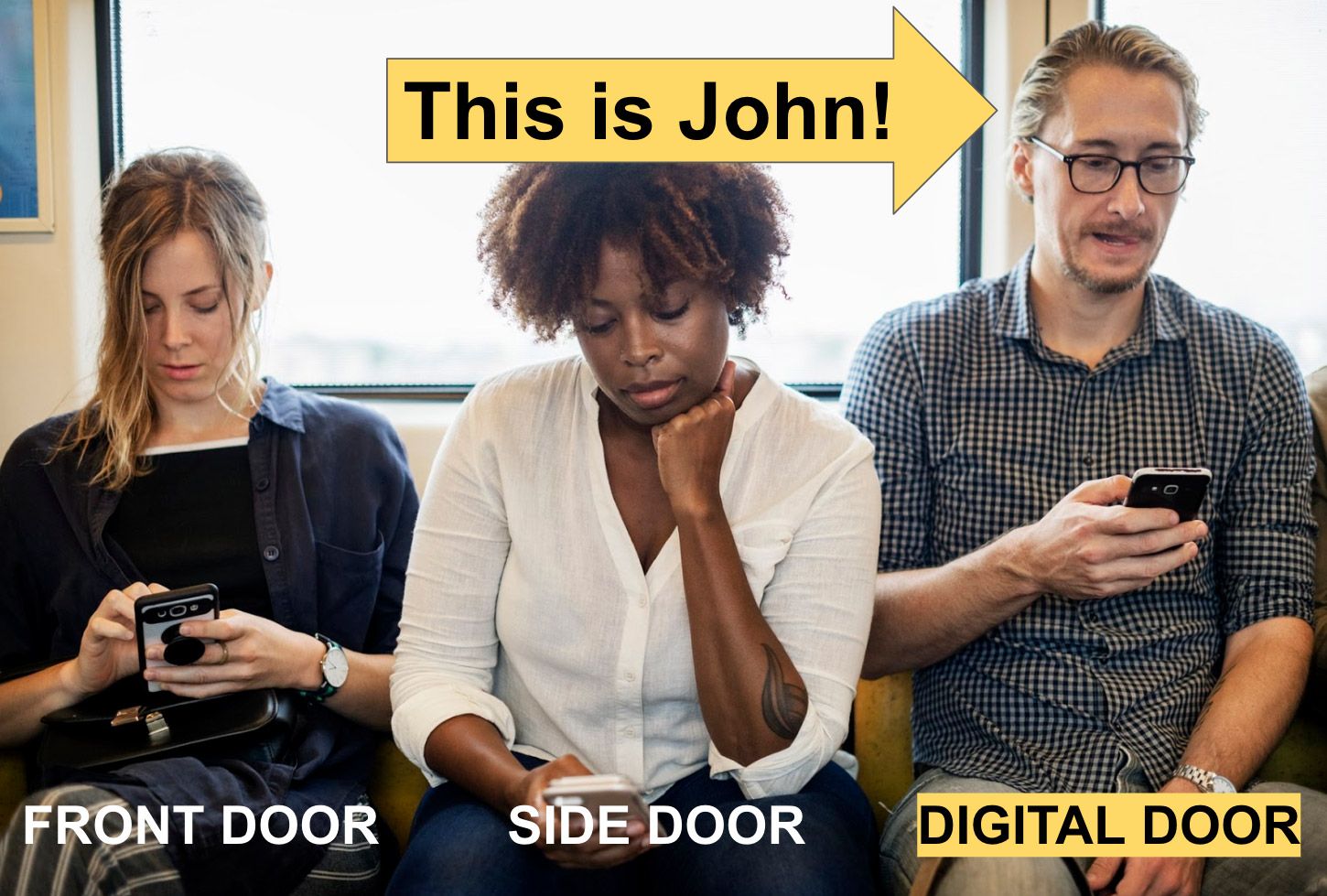
The Church has been slowly waking up to something that should have been obvious the moment everyone got a smartphone: digital spaces are not the waiting room for “real” ministry. They are ministry. But making that shift — philosophically, strategically, and theologically — is harder than it sounds.
If you’re new to the Church Online conversation, welcome. You’re not late. You’re just in time to build something that actually matters.
Why “Just Streaming the Service” Isn’t Enough
For most churches, the digital journey started with a camera pointed at a pulpit. And that was fine — for 2012. But broadcasting a Sunday service online is the equivalent of handing someone a menu and calling it a meal. It creates an audience. It does not make disciples.
The philosophical shift we’re talking about is this: moving from broadcast to belonging. From content delivery to community formation. From reach as the goal to transformation as the goal, with reach as the vehicle.
That’s a significant re-wiring of how most church leaders think about their online presence.
The Core Idea: Technology Is the Means, Not the End
Let’s get this tattooed somewhere. Technology is not THE END — it is the MEANS TO THE END.
Your website, your streaming platform, your social media accounts, your Discord server, your online campus — none of these are the mission. They are tools. Extraordinarily powerful tools that, when used intentionally, can extend your church’s reach into zip codes, time zones, and life situations that your physical building will never touch.
The goal is not discipleship virtually. The goal is to extend your reach virtually to impact people with the Gospel physically — in their homes, their relationships, their neighborhoods, their lives.
That distinction changes everything about how you build.
What This Shift Actually Looks Like in Practice
Making this philosophical shift isn’t just a mindset change. It requires structural decisions. Here’s what it can look like on the ground:
- Intentional online community groups. Not just a comment section during the livestream. Actual small groups, hosted in Facebook Groups, WhatsApp threads, or Zoom rooms, with a leader who knows names.
- A discipleship pathway that works digitally. If someone watches your service online for six weeks, what’s the next step they’re invited into? If the answer is “come visit us in person,” you’ve already lost a significant portion of your online audience.
- An online campus pastor or host. Someone whose job is to pastor the digital congregation — not manage the tech, but shepherd the people.
- Content designed for formation, not just consumption. Midweek devotionals, discussion questions, prayer prompts — content that invites response, not just views.
The Theological Foundation You Can’t Skip
Here’s where some leaders get nervous: Is online church even real church?
It’s a fair question, and it deserves a serious answer. The early church didn’t have buildings for the first few centuries. They met in homes, in secret, across vast geographic distances, connected by letters — letters — written by apostles who couldn’t be present. Paul’s letters functioned as a kind of asynchronous digital ministry long before the internet existed.
“For where two or three gather in my name, there am I with them.” — Matthew 18:20
Jesus didn’t specify a building. He specified His presence. Your job is to facilitate that presence in every space where people actually are — including digital ones.
Getting Up to Speed: Where to Start
If you’re just entering this conversation, you don’t have to figure it out alone. TCD has built a library of resources specifically designed to help church leaders think through the philosophy and the practice of Church Online.
- Blogs & Articles: Start with the foundational pieces on theology of digital ministry and what it means to build an online campus that disciples.
- Podcasts & YouTube: Audio and video content that lets you absorb these ideas on your commute or between meetings.
- Books, eBooks & Conferences: Go deeper with curated reading and events built around Church Online strategy.
The goal with all of these resources is the same: help you build a Church Online ministry that is shaped and adapted to fit your church’s context. Not a copy-paste of what works somewhere else. Your people, your culture, your strategy.
Your Next Step
Reading about the philosophical shift is the beginning. Actually making it requires someone walking alongside you.
If you’re unsure where to start — or you’ve started and feel stuck — book a conversation with theChurch.digital. We’ll help you assess where your church is, clarify what “Church Online done well” could look like for your context, and map out practical next steps you can actually execute.
The digital mission field is open. The question is whether your church will show up as a broadcaster — or as a church.