The Metaverse Isn’t Science Fiction. It’s a Mission Field.
Most pastors are still arguing about whether online church is “real” church. Meanwhile, Stuart McPherson is already planting one in virtual reality.
Stuart is the VR Campus Pastor at Lakeland Community Church in Lake Geneva, WI — and he’s not waiting for the rest of the church world to catch up. He’s building community, preaching the gospel, and making disciples inside the metaverse right now. In this episode, Jeff Reed sits down with Stuart to unpack what that actually looks like — and why every church leader should be paying attention.
What Is a Metaverse Church, Exactly?
Let’s kill the confusion first.
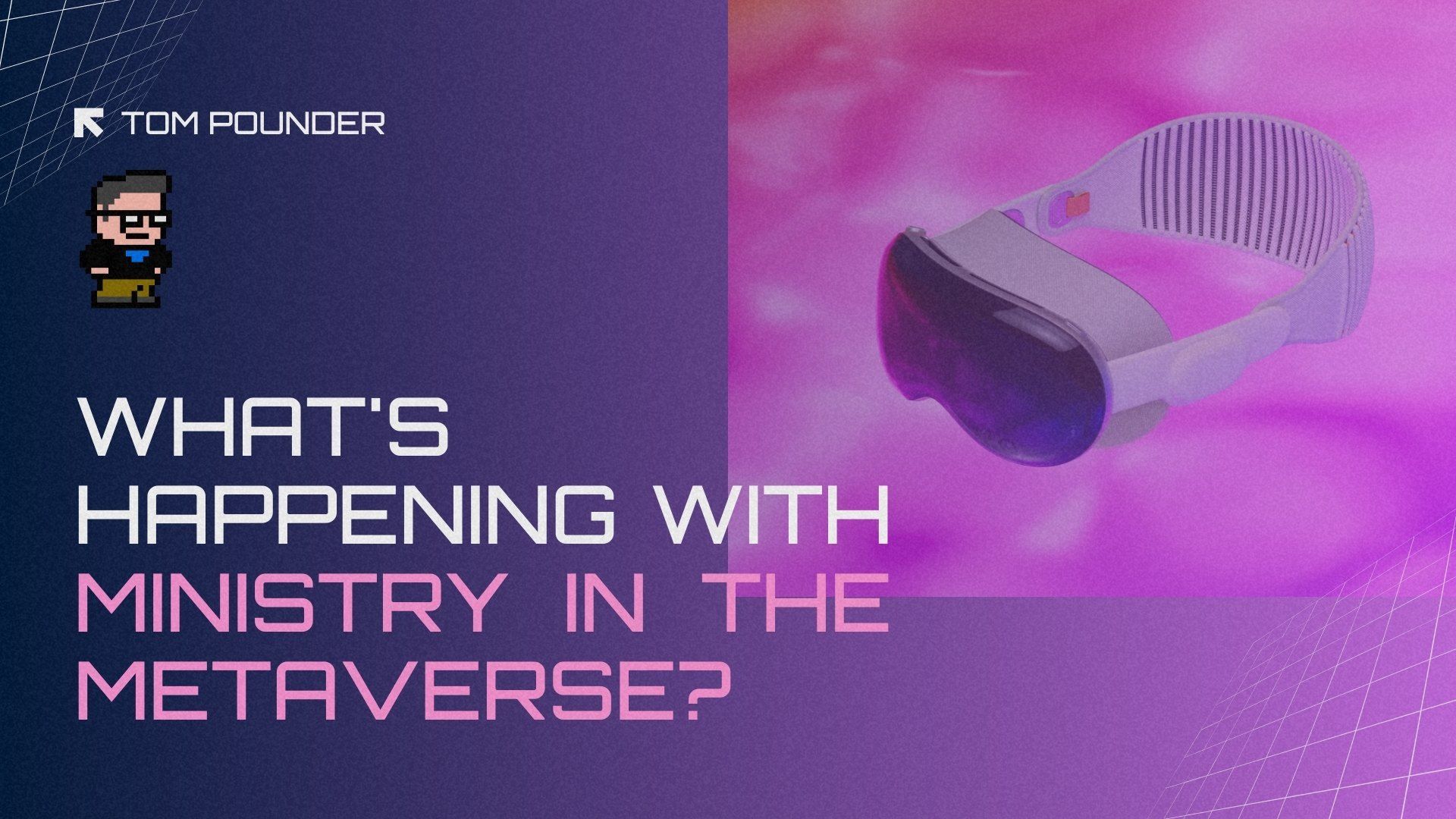
A metaverse church isn’t a video stream with better graphics. It’s a fully embodied (avatar-based) gathering inside a virtual environment — think VRChat, AltspaceVR, or Horizon Worlds — where people show up, interact spatially, and experience community together. You’re not watching church. You’re in it.
Stuart leads a campus that exists entirely in this space. Regular gatherings. Real relationships. Actual discipleship. The platform is virtual. The people are not.
That distinction matters more than most church leaders realize.
Why VR? Why Now?
Stuart isn’t doing this because it’s trendy. He’s doing it because people are already there.
Millions of people are spending significant hours in virtual environments — gamers, remote workers, socially anxious individuals, people with disabilities who can’t physically attend a building. The metaverse is one of the most underreached mission fields on the planet, and almost no churches are showing up.
Here’s the uncomfortable truth: the church has a long history of arriving late to cultural spaces. We showed up to radio after secular broadcasters had already shaped the medium. We arrived on social media after everyone else had defined the norms. The metaverse is still early. That’s the point.
Stuart’s bet — and it’s a well-reasoned one — is that this is the moment to plant before the culture is fully set.
The Theology Behind the Decision
This isn’t just pragmatic. There’s a theological conviction underneath it.
Stuart holds a straightforward view: where people gather, the church should be present. Jesus didn’t wait for people to come to a synagogue. He went to where they were — fishing boats, dinner tables, roadsides. The incarnational model of ministry demands presence in the spaces people actually inhabit.
“Go therefore and make disciples of all nations” (Matthew 28:19) doesn’t come with a footnote that says except digital ones.
VR campuses aren’t replacing embodied community. They’re extending the reach of the local church into spaces a physical building can never touch.
What He’s Actually Learned
Stuart is candid about the learning curve. A few honest insights from his experience:
Community formation looks different, not lesser. Avatars lower social barriers. People who would never walk into a church building will engage in VR. The anonymity creates safety, and safety creates openness to the gospel.
Consistency matters enormously. Showing up regularly — same time, same space — builds trust. Irregular gatherings kill momentum. Treat your VR campus like a real campus, because it is one.
The tech is not the ministry. Stuart warns against falling in love with the platform. The platform is just a door. What matters is what happens when people walk through it. Discipleship, prayer, community — those don’t change because the environment is rendered in a headset.
You need a shepherding heart, not just a tech brain. The people in these spaces are real, their struggles are real, and they need real pastoral care. Don’t send your most tech-savvy volunteer. Send someone who can actually pastor.
Practical First Steps for Church Leaders
You don’t need to launch a full VR campus next month. But here’s how to start taking this seriously:
- Put on a headset. Download VRChat (it’s free). Spend two hours exploring. You cannot lead in a space you’ve never inhabited.
- Find where your people already are. Survey your congregation. Ask who’s gaming, who’s in VR, who spends time in digital social spaces. The mission field might already be in your church.
- Listen to Stuart’s “Metaverse Church” podcast. He’s documenting the learning in real time. Don’t reinvent the wheel.
- Start a conversation with your leadership team. Not to make a decision — just to ask the question: Are we responsible for the people who gather in these spaces?
- Connect with others doing this work. TCD exists to help you navigate exactly these kinds of questions.
The Church That Goes Where People Are
Stuart McPherson has tattoos, piercings, and a deep love for Jesus — and he’s pastoring people in virtual reality who might never walk into a traditional church. That should challenge all of us.
The metaverse isn’t the future. For millions of people, it’s the present. The question isn’t whether the church should be there. The question is whether your church will be.
Ready to go deeper? Listen to EP272 with Stuart McPherson on The Church Digital Podcast — and subscribe so you don’t miss what’s coming next.