⌕
LS
Leighton Seys
So how does a pastor, after reading this, now go, I don't have one more thing to do, but I want to unleash my congregation to actually be disciple-making, but I can't lead a program. How do we help them shift their thinking from program to disciple-making? What are some of the steps they could implement and begin moving in that direction?
PJ
Peyton Jones
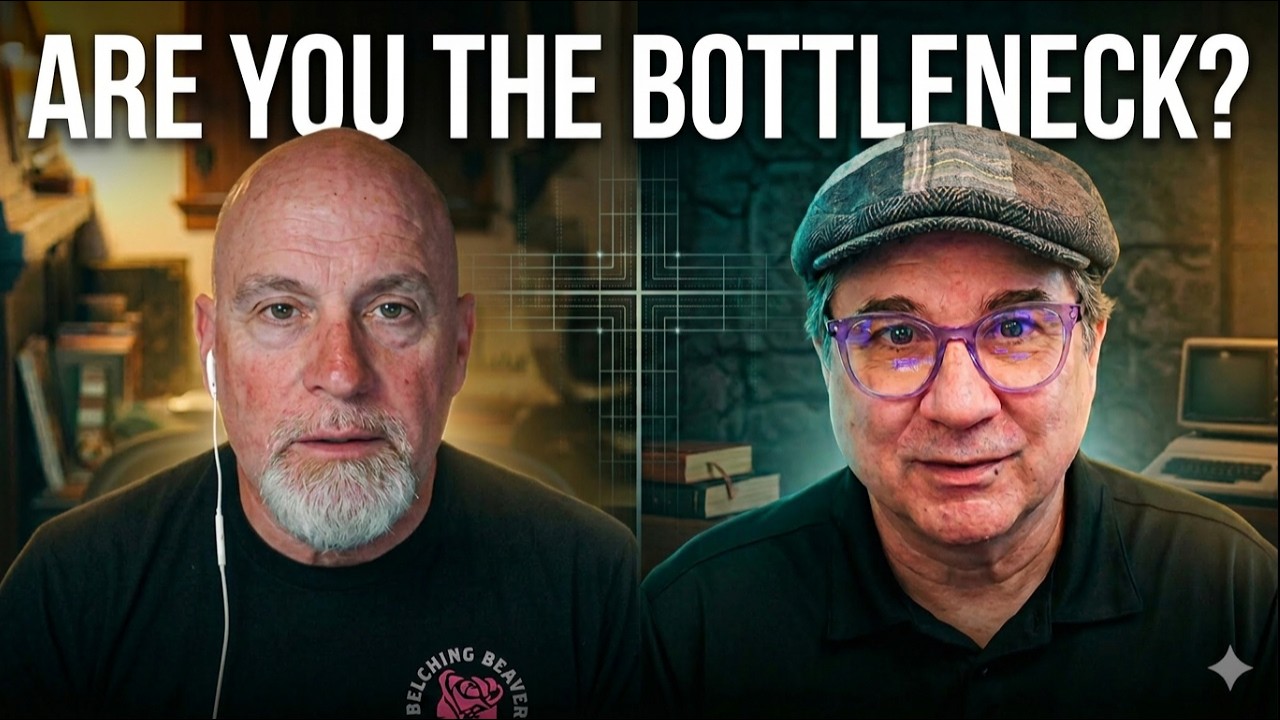
So good. I love your questions. Yeah. So when I was at Exponential, we told rooms full of pastors, hey, you're the bottleneck. And they agreed. Like that actually resonated with people more than anything. And we told them what we want you to do is we want you to take your phone out and go to Discipleology.com right now.
LS
Leighton Seys
Control-Alt-Redeem is for anyone called to ministry in the digital frontier. Gamers, streamers, and everyday believers navigating life online. Each episode equips you to live on mission and the real stories of lives being changed. Reset your expectations, reframe your mission, and redeem the space you're already in. This is where digital ministry gets practical, creative, grounded, and hopeful. One episode at a time. Welcome to Control-Alt-Redeem. We are resetting the culture and redeeming the space. And I have the privilege to have an author on the podcast today. So Peyton Jones is a disciple maker, Bible teacher, and founder of... new breed, a global network that equips leaders to multiply disciples in hard-to-reach places. He's a former evangelist at the Martin Lloyd Jones Historic Church in Wales. He has planted churches on three continents, and he's a consultant with a wide range of denominations. Peyton has authored several books, including Church Plantology. held content leadership roles with Exponential and Through the Word. He lives in San Diego with his wife and two daughters. Welcome in, Peyton. Thank you. Good to be here. Yeah, I enjoyed diving into your book, and I think I've really heard since COVID a focus on discipleship all around, not just from the church planting world, but all throughout my denomination, all throughout other pastors. We're like, okay, we've made a realization that we weren't actually making disciples. Whatever we were doing did not result in disciples being made. Was that kind of partly where you were feeling as well and made the decision to write this book and do the research towards it?
PJ
Peyton Jones
Absolutely. You know, I think, you know, in the very intro of the book, I kind of... I give a little context of where we've come from. In the past 70 years, we've seen various movements come and go. We've seen the church growth movement, the multiplication movement, the missional movement, all these movements. And multiplication is really kind of where most of us, I would say right now, came in. Like, you know, the digital church network, the... new breed. I mean, our two organizations have really, we were centered around multiplication and we were thinking about how do we multiply communities of believers, yada, yada. But church planning often fails when you make it about you know, starting a meeting and hoping people come to it. Whereas Jesus, he didn't start there. He started back in the gospels. Before Acts, he started in the gospels for three years when there was no church per se. And I know this will really resonate with the DCN crowd, which I'm a member of, by the way. I've been a member back when I was on Exponential and you guys kicked off. So I'm in here. You know, I've been on here before and I really love the work you guys are doing. It's really pertinent to the conversation we're going to have today, probably more than you realize. And I'll get to that. But yeah, I mean, I got it wrong. I put the cart before the horse like everyone else. We're all products of our environment. And, you know, I went to Exponential, was super excited. Church planning, let's go. A29 was out there. Tim Keller, City to City. It was go time for apostolic leaders. Like we were all about church planning. But when I was writing Church Plantology, it was actually during COVID. And I believe that was the end of the multiplication movement. I believe that when the church locked down and the church could no longer gather, people started thinking about, well, how do we scatter then? And I think, you know, like DCN again, it was one of the answers to that question, you know, through church. How do I just reach the people around me? All these things started springing up. And so I believe scholars will look back. on you know 2005 right now scholars agree that was the start of the multiplication movement with the burning bush conference um but the lockdowns in 2020 were the end i believe and i believe that scholars will look back and say that what we are currently in is the mobilization movement which is a return back to the gospels maybe saying we'll get to acts but if we get down what jesus trained the 12 to do in the gospels multiplication will take care of itself and that was mobilization he mobilized 12 people when there wasn't a church and there wasn't such thing as a church he taught them how to mobilize knowing that they would be able to multiply down the road
LS
Leighton Seys
Yeah, I really, really resonate with that aspect of the mobilizing piece because you're reading it and he's sending out the 12. He's sending out the 72. You bring those things out in nuance. And it's like the traditional model that I grew up in church. We're not sending out in teams of two. We're not sending out 70. We're not sending out 12. And I kept wondering, when do we do this? And then I get older and I notice, well, there are some churches that do it or... you know, some might call them cults and they send them out in groups of two and they knock on your door and nobody wants to talk to them. And it's like, well, this isn't what Jesus was sending out to do either. So it was like, where did that get lost along the way? And we'll get into a little bit of the three Ts. I don't want to jump ahead there. But as I was thinking about that, like the only place where I really felt like I fully had those three Ts was that time in seminary. I had all three of those Ts happening, but I go back into the church to serve and And now those things aren't happening. It's like, so why can't we do that? You know, so as I'm just resonating with, there are some barriers to us doing it. What are the barriers still in place? So now that we've got a few people saying, yes, it needs to be mobilization. It needs to be discipleship. What are those barriers still that the church is going to have to overcome?
PJ
Peyton Jones
Yeah, it's really good because, you know, you mentioned the three T's and the way that I walk people through those is I say that basically all of us have experienced one of those, at least. If you boil everything that Jesus did over his three years to make disciples, there were three things he did. Number one, time. He spent time with people. Number two, he taught them. And number three, he tactically engaged them to develop them on mission. So time teaching tactics and literally like... i'm not joking you can put anything he did into those three right leading up until like his crucifixion that was unique his resurrection all those were unique but um but they were for something different but within within his his earthly ministry you see those three buckets and so most of us came uh to church where there was one of those and that's normally teaching which people associate with a sunday morning right that's the main event it's the sermon everything is geared around the sermon the sermon whereas like churches of old the the the peak the climax of a service would have been the lord's table right it's not that now now it's the sermon and so the teaching would be at the at the height so most most of us come into it and we we thought that's how you make disciples teaching Well, Rick Warren in the 80s looks out, he's gathering thousands of people at Saddleback. And he kind of looks out and he thinks these people aren't being discipled. They're just hearing teaching and they're not doers of the word. So how do we get them into... mature disciples. And he starts doing the small groups. And he tells his church that the small groups are the heart of the church. And he eventually gets double the attendance. And he really starts that baseball diamond. I don't know if you remember that, where he has a baseball diamond. And it ends with mission, but it doesn't take you on mission, which is kind of funny. What I say in the book is that if you have time and teaching, so teaching is Sunday morning. Small groups at your church are time and teaching. You overlay them. When you overlay time and teaching, those two rhythms, you get discipleship. But it doesn't become disciple making until you add the tactical piece onto it. So when you have time teaching and tactics, you're engaging people on mission. Now you've got disciple making. And so when you asked about the barrier. I would say that's pretty much it. It's at that level that most churches can get to the small group level. They just don't know how to activate the believer into making disciples, which was the thing on the label, right? Go into all the world, make disciples. That's what we're called to. That's the church's whole reason for being, but we struggle to activate people. And if I say, you know, teaching brings information, time brings transformation and tactics bring activation, activation of your gifts. The other place you'll find it, you'll typically find the three circles in a youth group. That's the only place where it seems like we cracked that nut. We'll send people on short term missions, right? Like, say, take a bunch of teenagers. We say, hey, we're going to see New Mexico and you're going to serve. they usually get activated because they're using their gifts. Their gifts could be service, could be helps, could be compassion, could be other gifts like the more charismatic gifts too that might start to come out like the gift of prophecy or maybe healing or something. I tend to believe the more frontline you go on mission, the more those emerge in you because that's where they're needed. So when people say, oh, why don't we see those here? But I wrote a whole book about that called Reaching the Unreached. And, but with us, I think the biggest barrier is not so much knowing what disciple making is or why we should do it. I think it's how. I think people are just, I always say that people are less disobedient. and more disoriented. Like they go into church, they hear a sermon, they're all pumped up, like they saw a Rocky or a Creed film, they're ready to go punch people in the head for disciple making. And by the time they leave the church parking lot, you know, they're peeling out to go eat, they can't eat Chick-fil-A on Sunday, but whatever it is, they're peeling out of there to eat their whatever, their cracker barrel. And they're like, how? Nobody told me how. And so that's the biggest barrier, I think. And that's why Discipology was written, to kind of outline Jesus's process of making disciples. And it's not to say this is the way. It's to say this is how Jesus did it. And there's a science there. That's why the subtitle is The Art and Science of Making Disciples, because those three principles are so simple a child could do them. And the art part is the freedom. Like if I were to look at time teaching and tactics, I know Digital Church Network has those. Maybe nobody framed them out that way, but I know you guys are actively engaged on mission. I know you spend time together and I know there's teaching here. Been tracking with you guys for years. I get your emails.
LS
Leighton Seys
But one of the examples you use, the difference between discipleship and disciple making in the book was the difference between a donut tire and an all-terrain tire. i like i really was struggling with like because to me it felt like you were making a distinction without a difference and i'm like i can't like what am i missing that i can't fully grasp you're saying this but i'm going yeah but that to me that looks like it's disciple making discipleship felt like you're making a distinction when you gave that example was like my brain could finally say oh Okay, I get it. They both are tires from that standpoint, but one isn't actually going to be effective in doing much of anything. The other is actually the one that can tackle and conquer and move you down the road wherever you need to be.
PJ
Peyton Jones
It's so funny. So many people, I almost didn't put the tire illustration in there. I was speaking to a bunch of denominations and I had had a flat tire the night before and I had to ride my donut tire. And so when I spoke the next day, I use it as an illustration of discipleship versus disciple making. And so many people have come and said, my gosh, I changed everything when I saw it that way. And, and, you know, in the book, I've got a chart that puts discipleship and disciple making next to each other because I, I get, by the way, I just saw your Aquaman with your little shark back there. He's awesome. I'm a DC fan big time. So I love that. But yeah. So, so what was, what was funny is that I used to hear people make a distinction between those two and it would annoy me. I would feel like I just want to punch you in the face. Like. that's just annoying and you're being semantical and you don't got to be that way. But once you see it, you're like, okay, this is, okay, discipleship versus disciple making. In fact, if I take the book out right here, I can actually walk you through that chart because what discipleship and disciple making, the way that they're different is discipleship. It happens after conversion, right? Like you disciple a believer to maturity, right? So that they look like Jesus. Disciple making leads to conversion. So one happens after conversion, one leads to it. Discipleship is self-focused. Disciple-making is others-focused. Discipleship is with Christians. Like you go to Jan's house on a Tuesday night, she bakes you some coffee cake and, you know, serves you some Christian crack that's coffee for the uninitiated. And you have a great conversation. And it's really good. And the problem is sometimes when we're making contrasts, People think you're knocking one because we do this in the missional world, right? Hey, let me tell you what's crap. And now let me tell you my way, right? And this is the thought I forgot earlier is the art part of it. God gives us a million ways to make disciples. I would say DCN is making disciples digitally. It's, it's the art of it. It's your expression of fulfilling the great commission and you're doing it well, but with, um, with, so we get a lot of wiggle room with that. Right. And I like to tell people there's a million right ways to make disciples so when i say this is jesus's way i just want you to get the principles from that the science part of it look at what he did and then have fun with it like like go express it how it looks to you right jesus didn't do digital disciple making But I think he would have if he came today. You know, I know Paul would have, you know.
LS
Leighton Seys
Oh, yeah. I have no doubt about that. But I'm not going to convince a lot of people who have not experienced it and don't understand that relationship can happen online and relationship. Like for me, like of those time teaching and tactics, the one that I struggled the most being a pastor, leading a church, I didn't have time with people. People are off working 40 hours a week. Then they're trying to get time with their family. And then we're trying to say, hey, we got a couple of events you could come to so we can help you grow in your faith and do some things. And then we would throw in some now go practically go live out your faith in some ways, local events that we would do to, you know, clean up or reach the neighborhood or feeding or whatever we would, you know, plan. And I was like, OK. but I only get a fraction of people and I don't get time. And the thing I realized really early on being on Twitch is I had people that were on my board and I would see them monthly for meetings. We would pray before church on Sunday and I would probably have. in a three years term of serving with them, less than 40 hours of concrete time spent with them. And in a month time, I can have concrete time with a person on Twitch over 40 hours. It's like time is multiplied so fast in the digital space that can't be replicated in a physical world when everybody's going in different directions.
PJ
Peyton Jones
but if i've got the digital world in my hand i can still be engaged it's so true so so like here we've got a book right i've got this typology here there's a digital discipleship plan and that is the mvp like like literally so i i couldn't see digital church this is probably a good aside for us to have because i i got to go back to your question but it's probably a good it was chesley lundy who i was talking with who he kept calling me up and at one point he talked to me and i couldn't see it i'm like because i've always been an incarnational guy and i was resistant to it at first and and he was patient he he kept talking to me and i'll never forget i was up in lake arrowhead i was on a we were doing a film project and i was with these people and i was on this balcony overlooking lake arrowhead and i remember talking to chesley and chesley said well peyton don't you think that if the apostle paul were here today he would use digital as the next frontier. And it just, the penny dropped. And I went, oh my gosh, how, like, here I am this guy that's Pauline, right? Like I'm super Pauline in my missio praxis. And I'm like, dude, what, how have I missed this? Right? And so believe it or not, Discipology is a digital tool. The book is a tool to help, excuse me, to help you. But really the Discipology plan is a digital tool. primarily we're seeing people like i had a woman the other day she was a an invalid and by the way when we beta tested this 3 000 people signed up overnight and then they each go get their church planning partner only half of them did it so we had like 5 500 people right or there's 45 sorry 4 500 people so almost 5 000 people we've got now You just look at that. And in this one woman, she had signed up and her church planning partner is going to have to be her husband, but they reached so many people because it was a digital tool that, and it's just like, honestly, you guys like thousands and thousands of stories that we're getting in. I work for an organization called Through the Word as one of their main teachers. And so it just made sense to put these two together. But people are being activated in the digital space to make disciples. And much like what you guys do, but this is a tool for what you guys are already doing. But but back to your question, I just had to share that because I appreciate that. DCN actually was a big part of my transformation of getting into this space. I don't think I'd have the discipleship plan as it was without this ministry. So that's that's kind of a you probably don't hear that that often, but I had to be convinced. And it was through this ministry that I was convinced. Yeah.
LS
Leighton Seys
Well, and I think. some of it is like blinders like can that be i don't know if it can be or not early on you know as i got into dcn and now now we're the church digital it was a couple of people saying no we have to figure out theologically whether this works or doesn't work we have to answer all the theological questions and do it and i'm like yeah i don't think that's how the holy spirit usually works The Holy Spirit usually pushes the church in a direction it's uncomfortable with. And then later we figure that out. Yes, it's okay to go to Gentiles, you know, those kinds of things. So it was kind of like, for me, I mean, I'm one of those weird people that 10 years before COVID, I was live streaming my church service. But I wasn't trying to do evangelism. I was only trying to have relational community for those people who were shut-ins, who were invalids, who were snowbirds, who missed Sunday, who were sick. I was only trying to maintain relationship and community. And COVID opened my eyes up. There's a mission field here that I didn't see. So we all have blinders in some ways that at some point the Holy Spirit can pull those off and we go, oh my goodness, I did not know that this is what God could do. That's great.
PJ
Peyton Jones
It's great. Well, and you know, I, I didn't, I probably didn't mention the, that the invalid woman, yeah, should reach in tons of people. So it's funny because this gave her an outlet when she first heard of this, she was like, well, that's not for me. And her husband said, that's why you need to sign up for it and do it. Right. and and so going back to discipleship again it happens after conversion disciple making leads to conversion discipleship is with christians right at jan's house drinking drinking coffee and eating coffee cake and talking you know some topic is with non-christians if you're disciple making it's a weekly event discipleship It's a lifestyle, disciple-making. If you're doing discipleship, it's centered on a topic. You know, you could be talking through the book of Job, Dave Ramsey's financial stewardship. It doesn't matter what topic. Disciple-making is centered on Jesus. I need to tell you about Jesus. You need to follow him. Discipleship is an investment in self. It's really like your self-improvement. I want to grow spiritually. Disciple-making is an investment in others. Discipleship ends with you, right? Your own development. Disciple-making ends with others. Now, you would think what I'm saying is one is better than the other. No, they're both essential. If I had a diagram here, I'd show a feedback loop. Disciple-making. causes the need for discipleship. Discipleship causes the need for disciple making. It's a feedback loop that never stops. Because once you go disciple making, you create this problem. Now you got these groups of people. What are you going to do with them?
LS
Leighton Seys
Right. And that problem, I think, leads to you have to mobilize people to do it because I have limited capacity. Now my capacity might be different than yours. i might be able to have more acquaintances than you i might be able to have 70 and you you can you know have 50 whatever it is that you can be working with but that's it yeah it's an automatic i can't do it we have to mobilize right and raise up more people to get involved, which has been one of the most fun things with The Church Digital last couple of years is we are mobilizing more people to go and do things because those of us doing it, we're hitting our capacity and there's other things that God's leading us to do. So how do we shift? to new things he's calling us to if we haven't trained someone to take over the other things that we're doing and continuing to bring in and that's just it like finding the new people is disciple making we're constantly seeking that new person bringing them in getting in front of them you know we were talking before we got on stream about being a twitch streamer and we're not doing this this podcast on twitch but i love that moment i have that brand new person in there and i can start having a conversation with them my newest conversation is with someone who grew up in the church felt abused by the church left the church now is trying to pursue science to show that god doesn't exist in all of these things But a couple of things I said in there got him intrigued, and we're having a conversation back and forth over the last two weeks, continuing to dialogue and say, hey, there's something that I don't understand that it seems you do. Let's keep having conversations. And I'm just trying to point them to Jesus. That's all I can do. You want to talk down the science path? I don't have answers for you. There's a dead end at some point, but I can point you to Jesus and let the Holy Spirit take hold there. Yeah.
PJ
Peyton Jones
Yeah, it's good. It's really good.
LS
Leighton Seys
Yeah, I just, like I said, the tire, and I'm so glad you put that in there. That tire really helped me get my brains around and realize, no, you're not just playing semantics here and that kind of thing. Because I know how that game works and I use it sometimes too to try to sound smart. And when I'm probably got something wrong, I'll probably, you know, pull that out. But let's go into the three Ts, the time, the teaching, and the tactics. Because Jesus has them following around with him for three years on time. If we're doing that, and I know that in the book you flesh out the first year, the second year, the third year, and what he's doing along the way. But how do we do that in disciple-making when we might not have... 40 hours with a person you know in a month time how do we get time where do we invest in time i know for those of us in digital we think about asynchronous community and that's just you leave a message in the community when i get to it i read it and we go back and forth that way yeah i'm so glad that you mentioned this because for um
PJ
Peyton Jones
You know, do you mind if I back up and kind of unpack that a bit with Jesus? Because I, you know, if this were like, you know, the movie, The Prestige, this would be the reveal, right? The magic trick is showing people, because this is what I did, like back when I wrote Plantology. and i realized paul was on his first missionary journey he was trying to go fast he was all tactics three to four months in each place you know planting a church and then bye i'll see you later and just hoping they had enough to get him going not raising up elders or whatever he does on his final church. But like, even when Sergius Paulus comes to faith in Acts 13, just says, and then they left him by, you know, like there was no like follow up. Paul was just, let's go, let's go as many people as we can. And there is no time and there is barely any teaching because you need time to spend teaching, you know? And so he gets back in the Galatian heresy has happened. He's they're a mess i'm not even sure if they're saved so he goes back on a second missionary journey but he changes he starts doing the things that jesus did like he realizes i need to not just have the orthodoxy of jesus i need to have the orthopraxy of jesus so so i realized writing plantology which was i spell out paul's learning curve Right. But as I'm watching Paul and there's a whole section where I said this is what Paul started employing from Jesus. I thought, man, if if I missed it or if Paul missed it, then surely I missed it. Surely I need to go back and relearn from Jesus what Paul did. And that led to this book. Right. And so what I did late is I took a. It's over. It's behind me. I took a chronological New Testament.
LS
Leighton Seys
Right. Yes.
PJ
Peyton Jones
And I went through the gospels and I actually knew the scholars who worked on this because there's different versions. There's a couple like places for wiggle room. And I highly respected the scholars who did this. I worked with them. They've been Bible translators, yada, yada. And I started going on this journey to map out what Jesus did in what order. And that's where I could see it. So in year one, just to give you a quick overview of the three years time teaching tactics. In year one, Jesus primarily, like the first thing he does is he eats dinner with John and Andrew after he comes out from the baptism. First thing he does, slows down, has dinner. If you're the son of God, you're here to save the world. You're probably not going to slow down and have dinner with people. Then after meeting their brothers, James and Peter, because of John and Andrew. He invites them to a wedding. Hey, come with me to a wedding. You know, let's go. They go. And this is Philip Nathaniel with him, by the way. He meets six people in that first year. He only has six disciples. That's important to know. As he goes to the wedding of Canaan of Galilee, his family friends, it's a day's journey there. It's seven days at the wedding, one day back. So now they've spent nine days together. Now that's an epic road trip. If you've ever been on a road trip with someone, you either are best friends, bonded for life, or you want to kill them. So they're now bonded. They start going with him on the weekends, it says, to go to the synagogues and local synagogues all around Capernaum, which is where he moves because that's where Zebedee and his sons are from. These guys are fishermen, the north coast of the Sea of Galilee. So he moves there. He settles for a year. They've still got their day jobs, right? They're still fishermen. And then when they're at the wedding of Cain of Galilee, so Jesus is spending time. Eckhart Schnabel estimates that in that first year alone, they spent two to three months walking during waking hours. That's insane, right? So they have spent huge amounts of time together and all the conversations, John 1, you know, John 2, John 3, John 4. These are all year one, right? All year one stuff, time, deep conversations, traveling, going to Jerusalem and back. That took a few weeks. Going to the feast back again. So they got all this time. And then at the wedding of Cana at Galilee, his mom says, hey, would you solve this problem? They're out of wine. Of course, after, you know, it's like seven days, you know, people think it's like this didn't plan for that night. No, it was a long haul. It was a week long of having wine. Oh, yeah. So Jesus says woman. Now he's calling his mom woman. It's the only time he ever, you know, he's putting a boundary there. Woman. he's trying to let her know like hey you can't um get special favors it's not yet my time that's important because at the dawn of year two he says the time has come they they're looking for him it's in the middle of the night he's you know they find him their fishermen up early before the sun they find him off praying by himself and that's when he breaks news i gotta leave the time has come i must go to other cities and preach the good news of the kingdom for this reason i was sent well later right it's it's later on the boys go out fishing Jesus meets them on the shore. They come in. They've been fishing. They haven't caught anything. He says, hey, cast your net on the other side. They do. They catch all the fish. Jesus, Peter says, depart from me. I'm a wicked and sinful man. And Jesus says, follow me, and I will make you fishers of men. Follow me. And by that, he means i'm leaving come with me see we take it as like religious follow me you know no in the first year come and see was what you're thinking he keeps saying come and see come and see that's time that's the time rhythm year two it shifts when he says the time has come He's now going to go on his preaching ministry. That's what he's inviting them to come to. So all the other gospel writers, Mark, Luke and Matthew and Mark and Luke, the synoptics, they actually start at year two.
LS
Leighton Seys
They all start at year two. I found that fascinating because that was like I've seen others chronological, you know, New Testament taking the gospels together. I didn't see someone do that piece in there and say, hey, John is doing something different. here are just the six of them. This is happening before year one. I had not seen that. I hadn't heard that other places. So I really appreciated that kind of like, also it's like, it's pushing me to go, wait, I'm trying to get this concept over here, but now you're also pushing my view of that. So it's like, okay, I've got to realize I've missed some things in here, which I love realizing I miss things. I mean, I get excited about that too.
PJ
Peyton Jones
Like, this is the great thing. It's not like I'm writing from some position of being this great expert. This is my journey of rediscovery, just like Paul. And I think all of us have to go on that journey, and it's okay. Like, I think the Lord's sitting back going, yes, yes, Peyton, you know, like when Paul did it. Yes, you're paying attention to what I did. Like, because we've been ignoring what Jesus did to our own peril, right? But then, you know, not only that, he says, follow me, I'll make you fishers and men. And then it says they leave their nets and follow him. So now they've lost. He's called them to become the Talmudim, which is for the Hebrew. That means he's now full functioning as a rabbi. And they are his students who they're with him now, 24 seven. During that second year, he goes on his preaching tour. He preaches the kingdom, but he brings the kingdom right through miracles and what have you. Almost every time he does a miracle, there's a teaching it reinforces. So that's the teaching. rhythm. And when he says, follow me and I'll make you fishers of many saying, I will train you to be what I am. Now, during that year, during that teaching year, they're just spectators. They're just watching, right? They don't do anything. Not until year three, when Jesus at the very end of year two, it says in Mark three, he gathered twelve out of his disciples and brought them close that he might send them out. So, he calls them missionaries, sent ones, brings them in closer than the rest. That's at the end of year two. By the way, at the beginning of year two, as he's leaving Capernaum, He grabs Matthew on the way out of Capernaum, the tax collector. By the way, boys, we got a new recruit. And so he says to him, follow me, become my Talmudim. And he leaves this tax collector booth. It's insane. Like, we've never seen this. The Bible is not written chronologically to us, right? Neither the Old Testament nor the New Testament. But once you see it, you can't unsee it. Jesus, if you respect him as your Savior and Lord, which you should, you start to respect him now. for his praxis. Like he's such a genius, right? So then you're watching when now he's in year three, at the beginning and end of that year, it's bookended. Year three is bookended by the two missionary journeys, sinning of the 12 in the beginning, sinning of the 72 at the end. Each one of those journeys lasted again, Eckhart Schnabel, who is the preeminent missiology scholar of the he points out that like they know how many villages there were in galilee right he knows how many villages there were in judah and galilee when they send out the 72 they work it out each one of these journeys took anywhere from you know uh three to four months each So that leaves the four to six months in between. Now, here's the cool thing. When he sends out the 12 in six teams of two, they go through those villages. So I think it's like 243 or something like that. They go through all those, takes them if they spend two nights in each place, which is what he did in Samaria on the first year. they get this pattern and they come back and they're like, Lord, demons, they listened to us and miracles were done. They've never done anything yet. So they're marveling that they're able to do the thing. It says he gave them authority to do that. And then the 72 come back seeing the same thing. Lord, they're all amazed. But in the months in between, Jesus has them do all the other supernatural things we read about, like feeding the 4,000, 5,000. Hey, you give them something to eat. The miracle literally happens in their hands. They're the ones distributing the bread. Also, Peter walking on water. Lord, if it's you, call me to come out. The Mount of Transfiguration, the coins. to pay the taxes out of the fish's mouth that Peter catches. Jesus is engaging them tactically now. He's sitting back. He's still doing stuff, but there's a focus in each year, time, teaching, tactics, and he's preparing them in that third year, getting their hands dirty so he can leave and hand off the mission to them. And that's the thing about disciple making is if I'm just at Jan's on Tuesday night, which is super valuable, I should be at Jan's on Tuesday night. I should be doing the time and teaching together. And Sundays, by the way, for teaching, I don't knock that anymore because the teaching part is like a funnel. Jesus taught crowds. We're using Sundays correctly, actually, but it's the lowest form of church. right what you mentioned the church digital you've got the time and teaching right and the tactics is also there because you guys are always reaching out it's like a a neutral space for people but the tactics piece that's where if you don't move people into that that's what this does this starts to move you in it your original question was how do we do this now well this is the cool thing the discipleship, time teaching tactics. There's no right or wrong way. It's a flywheel. You can enter it. And I talk in the bio in the, in the book, I mentioned, even in the Bible, you see different people entering the flywheel, different points.
LS
Leighton Seys
Yeah. Yeah. I liked that. I think you also talked and use the example of Wesley and him traveling around and circuit riding and, and like, I've always been fascinated by that circuit riding mentality because It somewhat is model after Paul, but you have to stay long enough in one place to actually raise people up and do that. And then you're intentionally coming back. So you're coming in with teaching and time. Yeah. And in that place, you've got to give them the tactics so that when you're gone, they can actually implement these things or they're gone when you come back.
PJ
Peyton Jones
You want to know something so cool. Like Wesley is the closest thing we've had in the West to the apostle Paul. So like when, when you see, like when he had his classes, bands and societies, it's based on the three that Jesus discipled, the 12 that Jesus discipled and the 72 that he discipled. Like Wesley said, he said, I prefer the old wine the best. um so he wasn't trying to innovate something new what he said he was doing was trying to recapture he said something of primitive christianity and by primitive christianity he meant first century so wesley yes the circuit writing he left those those groups behind him he was raising up circuit writers and i mean this might be an aside but in bristol you can go to what's called the new room And he had taken over a congregation from George Whitfield when George Whitfield went to Georgia. And Wesley, Wesley kind of took it over. He was, he was a, he was an interesting character. He's one of my heroes, but I've got, you can't see it, but I got a little statue of Wesley on his horse there. That sounds fun. Yeah, it's pretty cool. And what, what happened was they built this new, it's called the new room and it's a chapel. In the bottom story are stables. Horse stables.
LS
Leighton Seys
Horse stables, yeah.
PJ
Peyton Jones
For circuit riders who come in and want to stable their horses. The, you go up these stairs and they've got the chapel and it's, it's a two story chapel, but then over top of that, you have another level and it's, it's. The re the meeting rooms and it's all these living quarters, little apartments, all ringed around a central common area that had a library and a lecture piece. So the circuit writers would come in every week, not the same ones. He had a road. He was a highly systematic like Paul. He would teach them there. And then they would stay there for the week, and then he'd send them back out. And he had this pulse when he was back, because he was normally out on the road himself. So he would pulse this to meet with the circuit riders at regular intervals. And he was, I mean, he really was the closest thing we've had to the Apostle Paul. But the time teaching tactics, it's exactly what he did. And I map that out in the book and show in detail, because I'm such a history buff. But what's amazing is that if we go back to that conversation we started with in the last 70 years. And this will really appeal to the church digital because every other movement that we've had so far has been telling you how to do church, right? Do this, do church growth, how you do church better, you know, make sure your announcements this way and your screen and your this and your worship. The missional movement, oh, this is how we do church. We do it in homes and it's got to be like this and you got to drink wine and you got to, you know, all this stuff. You have all that. And I laugh because that was all good. But all of it focused on how we are gathering, right? Wesley didn't care. He was an Anglican until the day he died. He didn't want to start another denomination. He died an Anglican when he died. Charles Wesley said, right, now's our time. Because he was always arguing to form a new denomination. And Wesley got it. Wesley was like, look, it's not about what's done inside the church that matters. It's mobilizing people outside of it. And that's what Wesley accomplished. That's why by his death, they went from this little, the Holy Club with five members in it at Oxford University to 10% of the British population being Methodist. 10% of the population. Imagine you could reach 10% of America, right? Just imagine that.
LS
Leighton Seys
Yeah, that'd be fascinating on some level. But again, it goes back to we have to mobilize others to get the scale to be able to do that because Wesley was not going to reach. 10% on his own. It had to be through making others into disciples to be able to carry that out. And I love how you talk about this being, you know, model neutral, you know, in that regard, because I think that's one of the problems I saw in some of the other movements as they were coming on is they were successful over there. Let's copy the model. They wrote a book. The book tells us how to follow the model. But One of the problems we were doing within, you know, this is part of after we made the shift from being a digital church network to the church digital and moving in that direction. One of the things that we struggled with.
PJ
Peyton Jones
I've been using the wrong name. Sorry.
LS
Leighton Seys
Oh, no worries. No worries. You're old. You've been around long enough to know the old. Yeah, you're OG. You know the old name. But one of the things around when we were making some of that shift and we made a shift a couple of years ago is we kept having people in our network and in our community that were never going to plant a church. okay, you're just out there doing evangelism. You're just out there helping to make disciples. Like what, why are you here? And what do we do and shift? And we shifted to that focus of being, helping people be digital missionaries, which is going out to disciple people, you know, to, or I shouldn't say make disciples, not discipleship. It's on that edge. So it's like the mold didn't fit the people we were reaching. So we had to change our focus. in this direction already without knowing that distinction that you're helping me see is we were already making and feeling that shift to the people we were reaching. So we just shifted. Now I've got more framework to say we were sensing and feeling some of the same things you were. We just didn't have all the language to say this. We were looking at it from a, well, we're reaching more missionaries than church planters. That's what we're doing. So we're going to shift in that direction. But some of them aren't even going to be full-on missionaries. They're just going to disciple and find one or two and then help them. And that might be it for them. And that's good. And that's wonderful because they've been mobilized and put on mission. And instead of... sit and then i have no problem with people attending and sitting in the pews but so many people that i know who have sat in the fuse for 30 and 40 years and you try to convince them that they have enough teaching to go out and do things and they want to learn more before they go yeah and i'm like what am i going to teach you you just need to have you just need to go
PJ
Peyton Jones
It's so good that you say that. Cause yeah, I mean, most people that read my stuff, because it's always the way that I write, I always write about what I've practiced and what I've practiced. Right. So it's always coming from a practitioner base. And then I see if I can train others. If it trains well, cause you know, I'm with new breed training. If it trains well, then I codify it and write a book with the principles. And that's why practitioners like you and others, like particularly within Church Digital, exactly you said, this is what we're doing. Like my stuff always resonates with practitioners because they've been doing it. But like you said, like that's actually kind of my mission is to put language to what practitioners are doing.
LS
Leighton Seys
Oh, yeah. Totally appreciate that.
PJ
Peyton Jones
Yeah. Because I am really, really self-conscious. I don't want anyone to think, like read my stuff and think. this is my way or I'm clever and I came up with this new thing. It's the opposite, right? I am discovering what others have done. It's why I quote other people so much in my books because it's borrowed brilliance. Number one, there are a lot of practitioners out there doing really cool things and I always feel I want to honor them in it. And number two, it really is like plantology is really the genius of Paul and this is the genius of Jesus. not the genius of Peyton Jones in either case, right? But as a practitioner, it's like when I became a missionary, because I was overseas 12 years, I started reading Acts differently because I wasn't smart enough to read the scripture and go, that's what we should do. Because it's not really prescriptive. It's more descriptive. Yes. But the principles are embedded there. And when I would practice things, I'd go back and read. So I read Acts so differently now than I used to as a pulpit expositor, right? Which is what I started out as. And I think for most practitioners, they're going to just be like, finally, someone's speaking to us. I guess not all this theory. And I'll also say this. I really appreciate you said, I appreciate the person that sits in the pew. because one thing that that discipleship really points to is there's a time like like jesus he slowed down like in the time rhythm he slowed down and for some people when they're sitting in the pew they need that like one thing the holy spirit would not let me do in this book was criticize anybody And you know, like when we're in the missional camp, we can criticize easily because we're passionate about mission. And on this book, I really felt the Lord just next to me going. So if somebody's just in the teaching sphere, we celebrate that. Hey, you're too. Because people are like, oh, your church just has teaching. And it's like, well, you know what's worse than the teaching?
LS
Leighton Seys
Having teaching? No teaching. No teaching. And not hearing the gospel.
PJ
Peyton Jones
And not learning. So, hey, praise the Lord for Sundays if teaching is the focus. But I'm going to celebrate when you add that next rhythm on top of it. And so, man, I can just tell you like that changed everything, that approach, because I think that's how the Lord is. I don't think the Lord is looking at the guy sitting in the pew going, hey, why are you just sitting in the pew, you bum? I think the Lord, like the Holy Spirit is always so, and you know this, right? Because I know you guys are activating people, the person who doesn't think they can do anything. And then they take those baby steps and the Lord turns up and meets them. And they're like, like the apostles are so encouraged. Lord, this, like they're as shocked as anybody. And you feel it's like when a parent is watching their baby take the first steps. I'm going to start crying. But like that is so beautiful when you see that. And that's how the Lord is. And that's how I feel in this book. So I wrote another book. I should probably tell everybody there is another book that came out at the same time that you can't see it. Cause I got that dumb blur thing on, but it's journey to disciple making and it, it goes with this. So the way these two books are different, this one is it's it's for the eggheads. It's for leaders. It's for people who are like, Hey, I want to understand the art, the science and art of this. I want to know the principles. this is actually just the quick start. I don't tell you this is the three T's. I don't tell you any of that. Well, I do actually a little bit tell you that, but it's not a deep dive. It's a quick start guide. So when you used to buy electronics and you get the big instructions, you get the one page quick start front and back. This is in 28 micro steps. We're going to make you fishers of men. We're going to make you into disciple makers. And the cool thing about it is I have to give you one more. I'm telling you guys way more secrets than I tell anybody. When I went to Zondervan, They were like, okay, cool. So we're going to do a disciple making book. And I was like, no, no, no, we're building a system. This is a system of disciple making. I don't want to just publish a book. There's so many books on discipleship, disciple making. I don't think the world needs another one. We need a system. We need something that'll catalyze leaders and catalyze everyday believers. So when I talked to them, they got that and they said, okay, so we'll do the two books then. But then I said, you know, you won't get movement if you gate it behind a paywall because there's people can't afford books. And if you're one of those people, please write to New Breed and ask it. Like, if you can't afford a book, I'll send you a book. But we made everything that's here, that quick start guide, 28 steps. This is a full length book. We digitize it. I asked Zondervan, can we digitize it? So this is where it becomes digital on the through the word app. There's the discipleship plan. Right. And you don't even need the book because you know who this resonates with a ton is youth. So like we went to FCA and. they didn't even wait for the book. They just started just doing it. And we're like, okay, like that's what youth do. That's why Jesus approached a bunch of teenagers. He bypassed all the leaders. And so we knew if we gated it behind a paywall or read a book kid, you're never going to get movement, right? So what we're doing right now is we're telling pastors, you're the bottleneck, believe it or not.
LS
Leighton Seys
Absolutely. That was kind of where I was going to go with my next question is, okay, so how does a pastor, after reading this, now go, I don't have one more thing to do, but I want to unleash my congregation to actually be disciple-making, but I can't lead a program. How do we help them shift their thinking from program to disciple making? What are some of the steps they could implement and begin moving in that direction?
PJ
Peyton Jones
So good. I love your questions. Yeah. So when I was at Exponential, we sent people, we told rooms full of pastors, hey, you're the bottleneck. And they agreed. Like that actually resonated with people more than anything. And we told them, what we want you to do is we want you to take your phone out and go to Discipleology.com right now. So they go there. And then there was like a referral when you get there where it's like we have a little text and we help you send it. And it's, hey, I'll explain this later, but I want you to download this system for disciple making. It's free, but we can talk about it later. What we told leaders is where Jesus started in John 1 is he grabs three people. who each like what people don't realize is jesus only grabbed three he grabbed john he grabbed andrew he grabbed philip john went and got james andrew went and got peter and philip went and got nathaniel jesus called three they each called their disciple making partner that's your first step on here grab your disciple making partner so we told him hey as a leader we're gonna we're gonna ask you to put yourself in the place of jesus you're gonna catalyze three people today Because as a leader of the bottleneck, you're going to overthink it. You're going to want to like, yeah, like you said, you think it's this big program, this heavy lift. Your people will just get started. If you pick three potential disciple makers, you just get them going. We'll hold their hand. We'll walk them through it, right? And they don't even need to buy the book. They can do it all digitally. And that's where their community is, much like Church Digital. You guys have a community. There's a community. So this is very familiar to you guys, right? But you literally just get started right there and it works. It's actually what's been happening.
LS
Leighton Seys
Yeah, absolutely. And I'm just going to speak a minute to any of my Twitch followers who are watching here. All of you that have your own Twitch community and your own Discord server, get on board with this. Don't think, oh, you're just talking in this theoretical church thing. I'm just a streamer. No, no, no. That's what I love about this. You are already being called into the digital space to make disciples and you feel it and you know it. Here's a way for you to unleash your communities, to multiply well beyond what you're doing and have capacity to do. Because frankly, I can't disciple 72 people at once. I can't do that, but I can take three at a time, which I often have been. doing over the years is I have identified three people and I help coach them and I help do things and it's not this program but it's other focus that I've done and three seems to be a really manageable number to bring along alongside of and invest in so really simple and I just want to encourage you don't think this isn't for you if you're watching this go get online start doing it see what you can do and if you don't have three start with one
PJ
Peyton Jones
Yeah. Thanks so much. And I was going to say to any of your Twitch streamers out there, if you want me to come on and talk about this, I'm happy to do that. I'm actually late. And when you said that right then, I'm just thinking, man, I am so intrigued by, cause you and I were talking before I'm on Twitch, right? I watch, I'm a gamer and I think all cool pastors are gamers. Right. But you know, the thing is, is that Man, like, I am so intrigued because if you're in this space, you're a practitioner. You're already a practitioner. Yes, absolutely. It was back because I'm OG on World of Warcraft. I played first year, right? I was vanilla. Oh, wow, man. Because I'm old. Look at me, right? Me and Metzen are the same age. By the way, Metzen's a believer. If you don't know who Chris Metzen is, he's a believer. I was good friends with this pastor, and I met him through this. So he's a believer. So every once in a while, I'm chatting with Metzen. Yeah. Um, but man, I tell you what, uh, the thing is, is that, uh, when, when it, when I joined my first guild, uh, on home world of Warcraft and people found out I was a pastor, I had people come in and talk to me about suicide. I had people come in and talk to me about divorce. I, it was like nonstop, the doctors in the doc and then my guild master. came to faith through talking to me and then he had cancer and passed away. He went all over the world and built theme parks and he was a neat guy. But yeah, I mean, I'm telling you, man, like that whole space right there is so important. So important. So.
LS
Leighton Seys
Yeah, yeah. And within the Church Digital, I spend most of my time, and as does Andy, another one of our senior leaders, over in the Twitch space. That's where our ministry is taking place. Those are the people that we are helping to mobilize and empower and train and put them on mission. But having come from pastoring churches, having come from pulpit ministry, I still have this heart for them. for going to the church who the pastor is doing everything they can, knows that they're not mobilizing their people, but doesn't know what to do. And frankly, Sunday's coming and they've got to preach. And Thursday, they have someone in the hospital and their life is interrupted with constant rhythm of urgency that they're solving and they never have time and capacity. to mobilize and unleash their people and i really think that this is something that can resonate in so many different places because it is about time and when you think about time it's not well just one week it is ongoing relational time with people and and that's one of the things i try to frame around people that don't understand digital as relationship it is i have relational presence with you yes we can have the spirit present with us you start framing things a little bit different in that and you realize yeah well there's also these things that happen too that i'm having happen more and more to me that's really kind of interesting you probably as an author have this as well people come up to you feeling they know you you are known to them because of your books and other things that they've watched you i'm in that space now within within the christian twitch fear not the full twitter of people coming in and knowing who I am and being intimidated to come up and have a conversation. And I was like, from me? I'm like, nobody. Come up and talk to me. Like, I love talking to people and helping you get to what God's calling you to. So I really appreciate you being able to. give this away and not just say, yeah, it's brilliant, it's good, but I got to get paid for it. Or that Zondervan was willing to say, sure, we'll let you have electronic copies because sometimes they don't always, you know, and you need to do that.
PJ
Peyton Jones
Yeah. I mean, it really is amazing. And what you said there is so important. There's a guy named David Sunday who also writes about disciple making. Good friend of mine. He told me that his mentor said to him. that the secret to ministry is shifting from spending less time with more people, like a Sunday morning, and spending more time with fewer people. You will have a greater kingdom impact when you do that. Hey, to your audience, if anyone wants to get a hold of me, for any of the things I've talked about. You can go to Discipleology.com, but if you want to personally connect, it's Peyton at NewBreathtraining.com. If there's any way we can help or serve or what have you, want to get in touch to stream or whatever. Thanks so much. And I appreciate so much, Leighton, you having me on.
LS
Leighton Seys
I appreciate you. Thank you so much for being on here. I will be sharing this with as many people as I can, encouraging them to check it out and get involved and just see what God can do in and through. So, Peyton, been a pleasure. Thank you for joining me.
PJ
Peyton Jones
Thanks.
Auto-generated from audio, lightly cleaned for reading. · Watch the full episode →
